

Becoming an Incidental Landlord During Covid
I had just landed in San Diego and was checking into my hotel to begin shifting my strategy from selling to becoming a landlord. I was set to meet with my listing agent to get the keys back and any other pertinent items the following day. I would then begin interviewing property management companies that afternoon. I wanted to make this transition quickly. I knew I wasn’t going to stop the money bleeding from the property, but I wanted to make it manageable.
You may recognize this story; I’ve referenced it before in “My Duplex Investment: From Accidental to Intentional” and “Here’s How I started: Building Wealth One Brick at a Time”. Well, here is the unfiltered full story of what happened.
Why We Couldn’t Just Sell
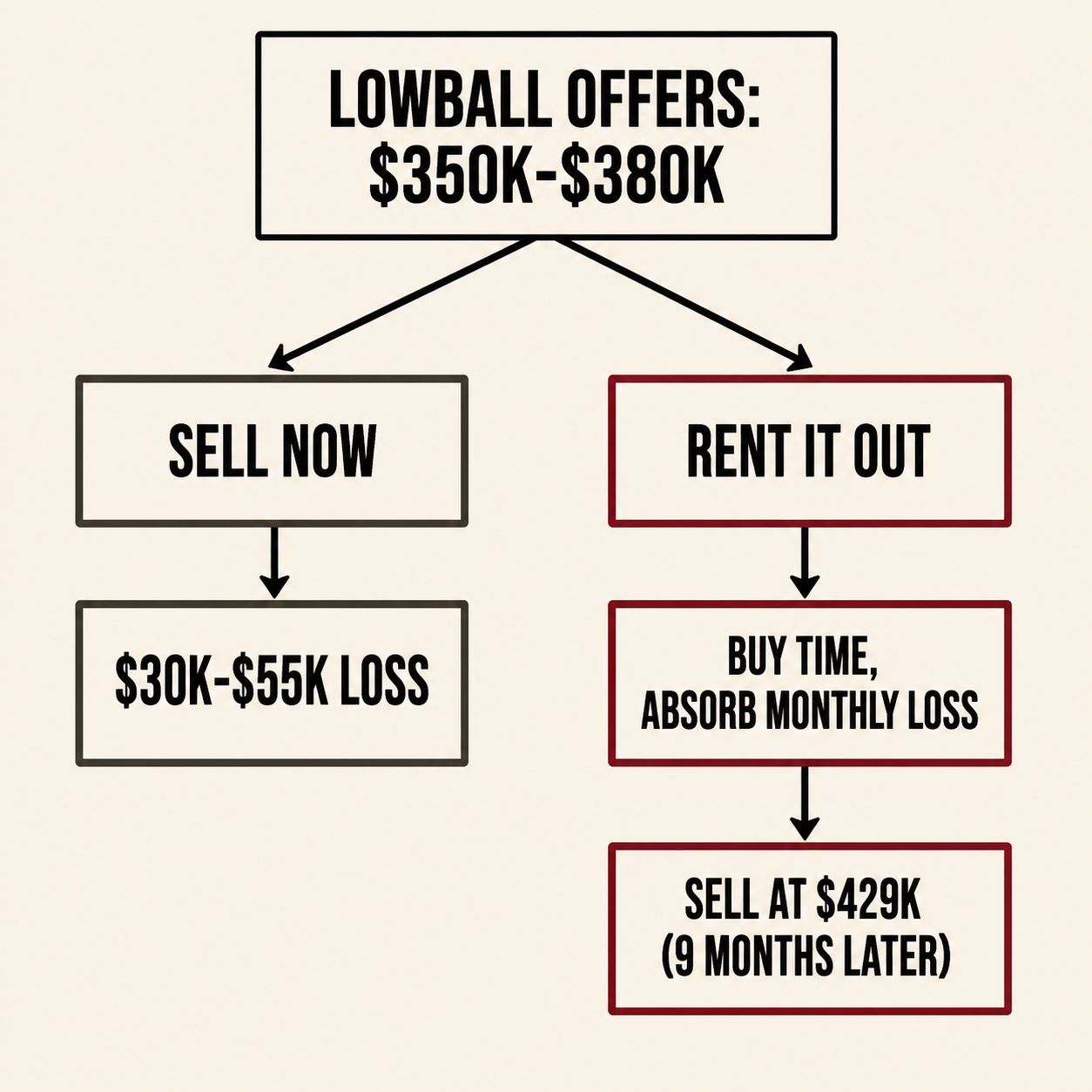
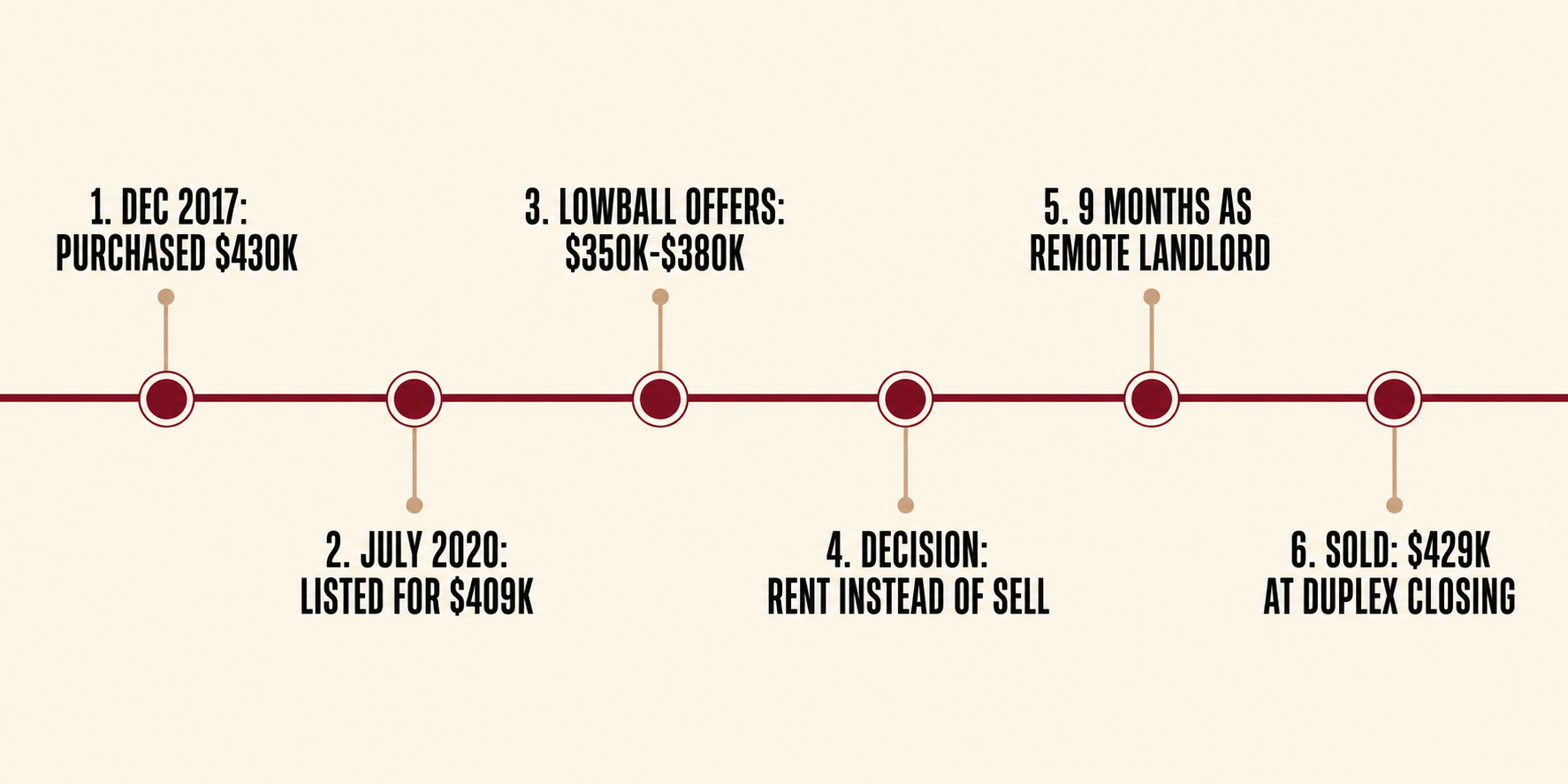
The mortgage was crushing us at nearly $2,800/month that was doing nothing but burning a hole in our pockets. We purchased the property for $430,000 back in December of 2017 and listed the property for sale in July of 2020 for $409,000. On top of the rent, we were paying an additional $475 in HOA fees, every single month. It was crushing our personal financial picture and presented a problem with trying to purchase a new home. We needed to make a decision.
We were getting offers for $350,000 to $380,000. The property sold, for the first time in November of 2004 for $414,500. It was then subsequently sold for $387,000 in April of 2007, a negative 6.6% return. For historical context, this was at a time when the Great Financial Crisis (GFC) was rearing its ugly head, which would not only disrupt housing markets, but global financial markets. It felt like we were at another one of those decisive moments in history where I wished I had a crystal ball. From 2007 until 2010 the housing market struggled and median sales prices dropped. Had we hit another GFC induced by a global pandemic?
I’m not going to lie, getting these low offers felt like getting taken advantage of during a global pandemic. Maybe these buyers thought they were doing me a favor while scoring a steal. Maybe they were just circling a wounded seller. Honestly, probably both. Either way, it hurt. But there was another option: rent it out until the market ‘normalized.’ I was still going to lose money. How much was the real question.
Becoming a Long-Distance Landlord
At the time, I knew the market fundamentals were off due to a global pandemic. After all, the property was in Gaslamp, a lively district in downtown San Diego where people wanted to be. Now, I didn’t know if the market would “normalize” in 2 months or 3 years, but the readily available information I was looking at was predicting sooner rather than later. I needed to buy some time. So, I ended up taking the keys from the real estate agent that consistently proved to be a bad advisor during this dynamic time, and I began my hunt for a property management company to act on my behalf. Becoming a landlord from a thousand miles away wasn’t part of the plan, but that’s exactly the position I was in.
This was all happening while me and my wife (Thais) were establishing our roots in San Antonio. I started a new job, Thais started adjusting to a new state and a new country, and she began the citizenship process, all while the world adjusted to the pandemic. My visit to San Diego proved to be very fruitful. We found a property management company and things began to look up.
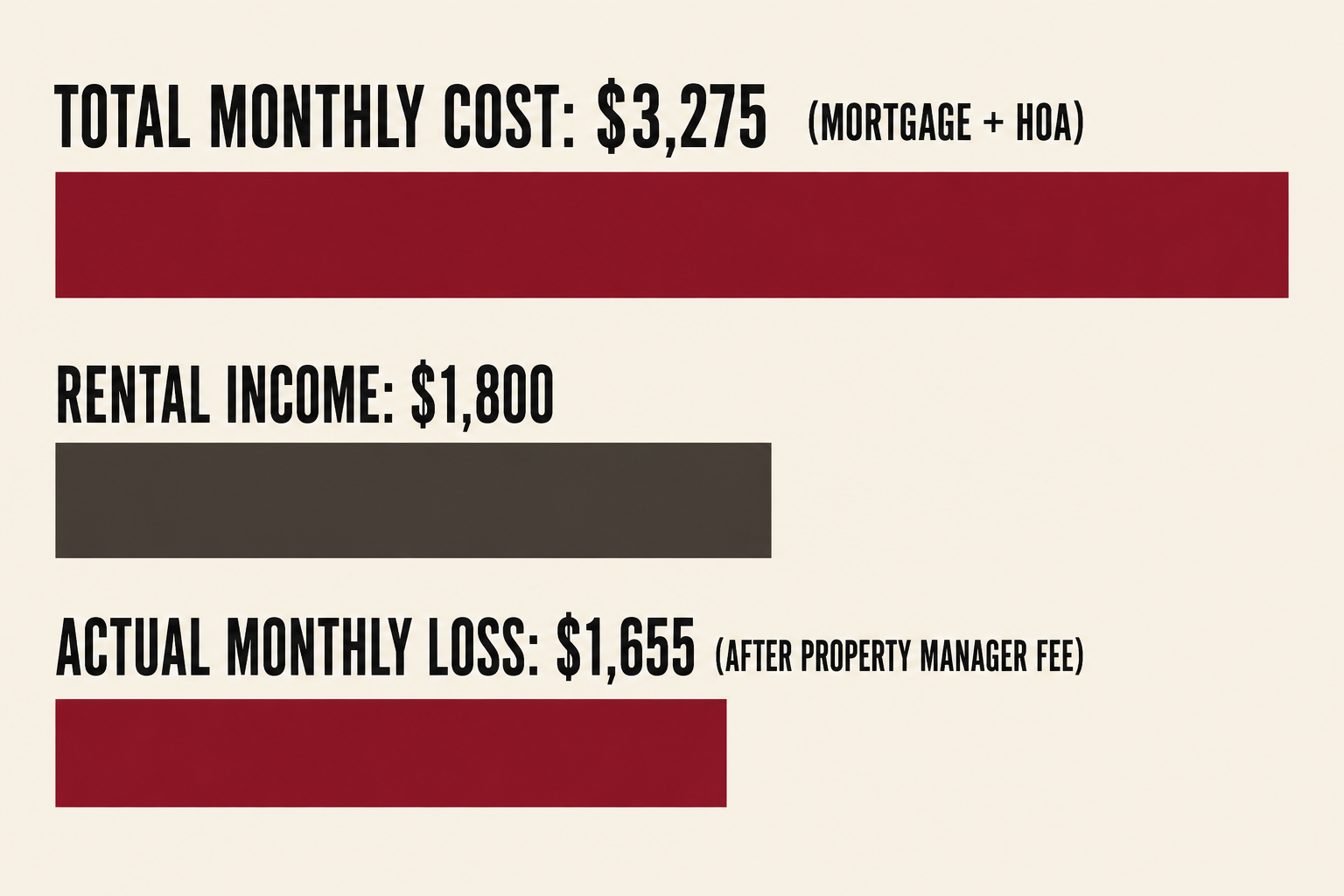
We listed our property for rent about 3 weeks after we decided to turn it into a rental and the listing price was $1,800 per month. Now, was I ecstatic about that rental price? Obviously not as our mortgage was nearly $2,800 per month plus $475 for the HOA, a total of $3,275 per month. We would lose $1,475 per month if everything went well. If you have ever owned real estate, you know that things don’t always go according to plan.
The Real Cost of Becoming a Landlord
Less than three days after the property was officially listed for rent, we found a tenant. I was able to breathe a sigh of relief. We hadn’t stopped the bleeding, but we addressed the most damaging of wounds and felt financial relief immediately. The problem was that I forgot the property manager wanted to get paid for their services as well. The audacity of someone wanting to get paid for their work. Turns out that’s how services work, and our fee was 10% of the rental price. There was also a placement fee for finding a tenant. So, the $1,475 I was already bracing for became $1,655 once the property manager’s cut was added in. Well, if my life were a Kalshi trade, I would take the “no” contract.
Murphy’s law took over and in the 9 months that we had the property rented out, we spent over $3,500 on maintenance issues. The most prominent, and costly, issue was replacing the HVAC. This was all going on while me and Thais continued to establish ourselves in San Antonio, TX. We needed to have a tremendous amount of trust with our property manager. The property manager, as per their agreement, didn’t need our approval for any repairs or maintenance that was $300 or less. At first, I didn’t really like the idea of giving the property manager a blank check up to $300, eventually I did develop an appreciation for it.
For every single little issue, I didn’t need to be involved. When it came to replacing the HVAC, I was included in the approval process, but I wasn’t driving it. The property manager sourced and coordinated everything that needed to be done. That alone cost us about $3,000. We also had to replace the garbage disposal, which also exceeded the limit, and was the only other issue that did, but we were significantly less involved. We were able to focus on living our lives and not our property located more than a thousand miles away. I would be lying if I said I didn’t worry though.
What It Was Actually Costing Us
In all, we were spending about $2,050 per month on our condo in downtown San Diego. This weighed heavily on my mind. Did I make the right decision? If we were to sell the property, we were looking at a $30,000 to $55,000 loss when you factored in all the fees associated with the transaction. Even if we had sold our property for the listed price of $409,000, we were looking at losses of about $15,000. We were not in an advantageous position.
Our decision was based on the premise that the market would recover quickly and that losing $30,000 was not acceptable. So, we decided to buy time with renting the property out for a monthly loss or negative cash flow. While I wish I could say I slept easily at night after making this decision, I couldn’t.
The Exit
Having a property manager managing the day-to-day operations and the sale was critical to our success. They did all the heavy lifting with our larger maintenance issues and were able to leverage their connections for us. Could I have done it cheaper myself, absolutely! But I didn’t want to have to take care of those problems and was glad to pay them for their services. They weren’t perfect, but I didn’t have to source someone to help, order parts/material, and coordinate schedules with the tenant and team doing the maintenance. It was a massive weight off my shoulders so I could focus on a new job, environment, and house hunting.
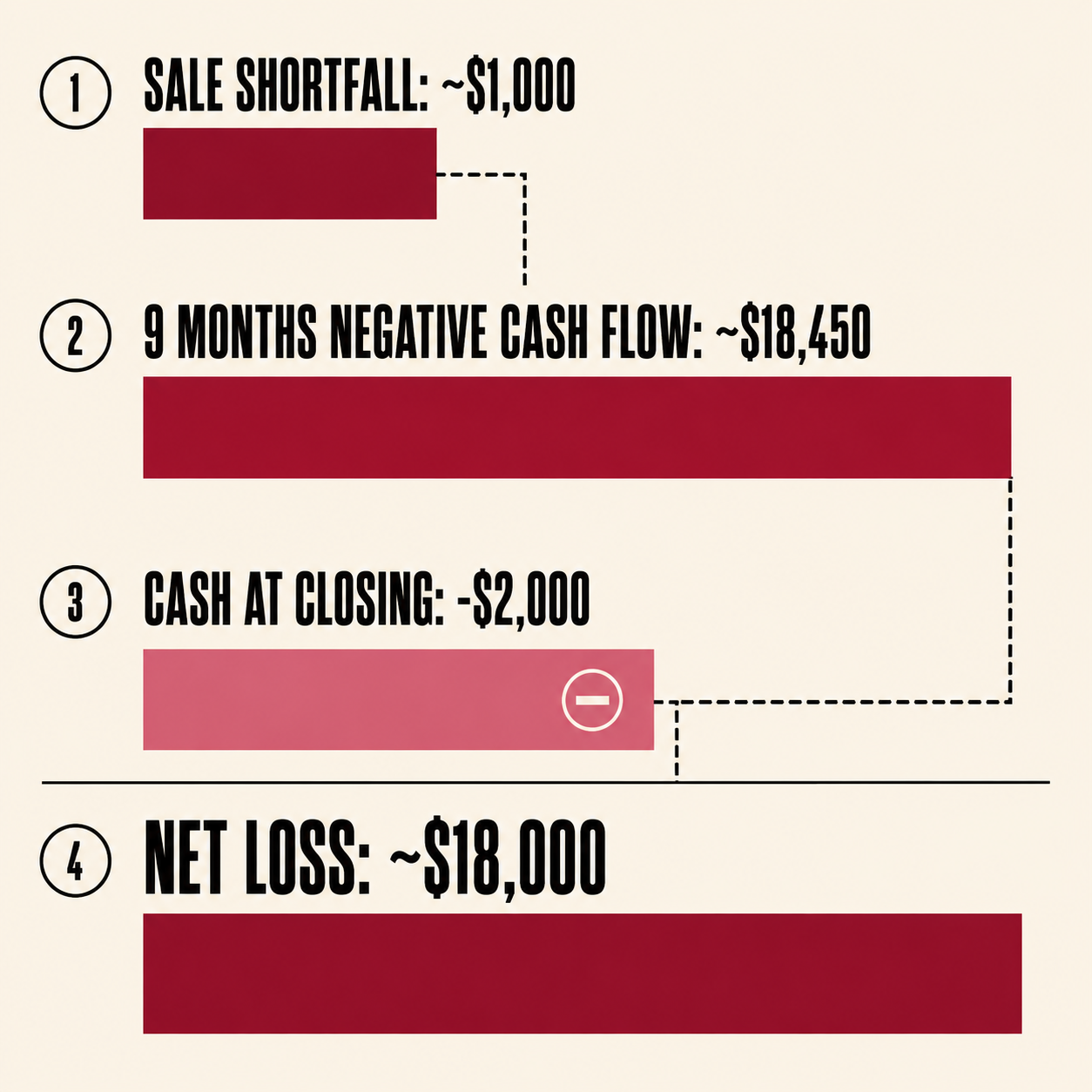
So, we finally exited. We were looking to make the close on the duplex easier and the sale of the condo was a good start. Working with our property manager on this matter was very easy. They dealt with the tenant, which was looking for a way to leave, and negotiated on our behalf with the buyer. It was a win-win for us that made the closing on our duplex far more simplistic. Sometimes knowing when to hire it out versus doing it yourself makes all the difference. We were able to sell the property for $429,000, so we ended up selling for $1,000 less than what we purchased it for and received about $2,000 cash at closing. Remember that $2,050 a month we were bleeding out? Nine months of that added up to another $18,450 before we ever got to the closing table. All in all, we had a net loss of approximately $18,000. Either way you look at it, it’s hard to see the silver lining in all of this.
What Becoming a Landlord Taught Me
Becoming a landlord taught me a few things I didn’t expect to learn. The key takeaway for me isn’t the money aspect, per se, but the foundation we began to build off with our duplex investment. First and foremost, cash reserves matter. You can underwrite an ideal property but still get steamrolled by the market you didn’t see coming. The difference between panic selling into a $30K – $55K loss and walking away financially devastated is a cushion to absorb negative cashflow, for a period. This experience has helped shape much of my investing philosophy which prioritizes cash flow over appreciation. Next, a good property manager isn’t a cost, it’s insurance. The 10% monthly fee was annoying, at first. Nine months, one dead HVAC unit, countless phone calls I didn’t have to deal with, and the successful sale of our property later, it seemed very reasonable. Finally, block out the noise and focus on what is in your best interest based on the readily available information. I didn’t know exactly what was going to happen in the future or how long it would take, but I did some research, developed a plan, had cash reserves, and put the appropriate team in place to solve the problem. It wasn’t perfect, but we adapted, overcame the situation, and learned.
Come Build With Me
If you’ve ever had a property (or a life plan) get upended by something completely out of your control, I’d love to hear about it. Join the Brick & Yield community for more real stories from the ground level of real estate investing. It won’t be just the wins, but the ones that tested us. The ones that we can learn and grow together from.
Photo by Stephen Leonardi on Pexels
This post may contain affiliate links, meaning I may earn a small commission if you make a purchase through them, at no extra cost to you.
I’m sharing my own experience as a real estate investor, not professional financial or investment advice — always do your own research before making decisions with your money.
One Comment